ARCHITECTS / E
The architects featured in this section (A-Z) represent a diverse range of ideas, styles, and groundbreaking approaches that have shaped modern and contemporary architecture. From visionaries of the early 20th century to today’s influential designers, these books provide a deep dive into their creative processes, philosophies, and landmark projects. Whether redefining urban landscapes, experimenting with materials, or pushing the boundaries of form and function, these architects have left a lasting mark on the built environment. Explore their works and discover the foundations of architectural thought and practice that continue to inspire generations.
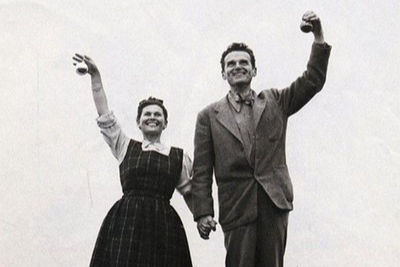
Charles and Ray Eames
Charles and Ray Eames were an influential husband-and-wife design duo whose groundbreaking contributions shaped modern design. Charles, an architect and filmmaker, and Ray, an artist and designer, blended their expertise to create innovative, functional, and aesthetically refined works. Their iconic designs, including the Eames Lounge Chair and the Eames House, showcased their mastery of materials like molded plywood and fiberglass, revolutionizing furniture design. Beyond furniture, they excelled in graphic design, exhibitions, and filmmaking, using storytelling to enhance their creative impact. Their multidisciplinary approach left an enduring legacy, defining 20th-century design with a seamless blend of artistry, practicality, and innovation.
Peter Eisenman
Peter Eisenman, born in 1932, is a renowned American architect, theorist, and educator celebrated for his deconstructivist and intellectually driven approach to design. As a founding member of the "New York Five," he challenged traditional architectural norms, emphasizing abstraction, geometry, and conceptual depth over conventional functionality. His notable projects, such as House VI, the Wexner Center for the Arts, and Berlin’s Holocaust Memorial, embody his commitment to architectural experimentation and theoretical discourse. Beyond his built works, Eisenman has profoundly influenced contemporary architecture through teaching, writing, and debates, positioning himself as a pivotal thinker in shaping modern architectural thought and practice.

Craig Ellwood
Craig Ellwood (born Jon Nelson Burke; April 22, 1922 – May 30, 1992) was a self-taught American designer who became a key figure in mid-20th-century modernist architecture. Despite lacking formal training, he founded Craig Ellwood Design in 1951 and gained acclaim for his refined, elegant structures. His Case Study Houses 16, 17B, and 18 epitomized the fusion of Mies van der Rohe’s formalism with the casual, open spirit of California modernism. Beyond residential work, his "Bridge Building" at the Art Center College of Design in Pasadena remains a landmark. Ellwood retired in 1977 to Italy, dedicating his later years to painting.
_edited.jpg)
Arthur Charles Erickson
Arthur Charles Erickson (June 14, 1924 – May 20, 2009) was a renowned Canadian architect and urban planner celebrated for his innovative modernist designs that harmoniously integrated architecture with the natural environment. Born in Vancouver, British Columbia, he studied at the University of British Columbia and later earned his Bachelor of Architecture from McGill University in 1950. Among his most significant works are Simon Fraser University in Burnaby, the Museum of Anthropology at the University of British Columbia, and Robson Square in Vancouver. In 1986, Erickson became the only Canadian architect to receive the American Institute of Architects' Gold Medal, underscoring his profound impact on architecture both nationally and internationally.

Aldo van Eyck
Aldo van Eyck (1918–1999) was a visionary Dutch architect and a key figure in the Structuralist movement, known for his human-centered approach to design. Educated at ETH Zurich, he co-founded Team 10, a group that challenged rigid Functionalist ideals in favor of socially engaging architecture. His most celebrated work, the Amsterdam Municipal Orphanage (1955–1960), exemplifies his belief in creating spaces that encourage interaction and community. In addition to buildings, he designed over 700 playgrounds in Amsterdam, pioneering inclusive urban spaces. Van Eyck’s work emphasized the dynamic relationship between people and architecture, profoundly shaping 20th-century urban design and theory.
